
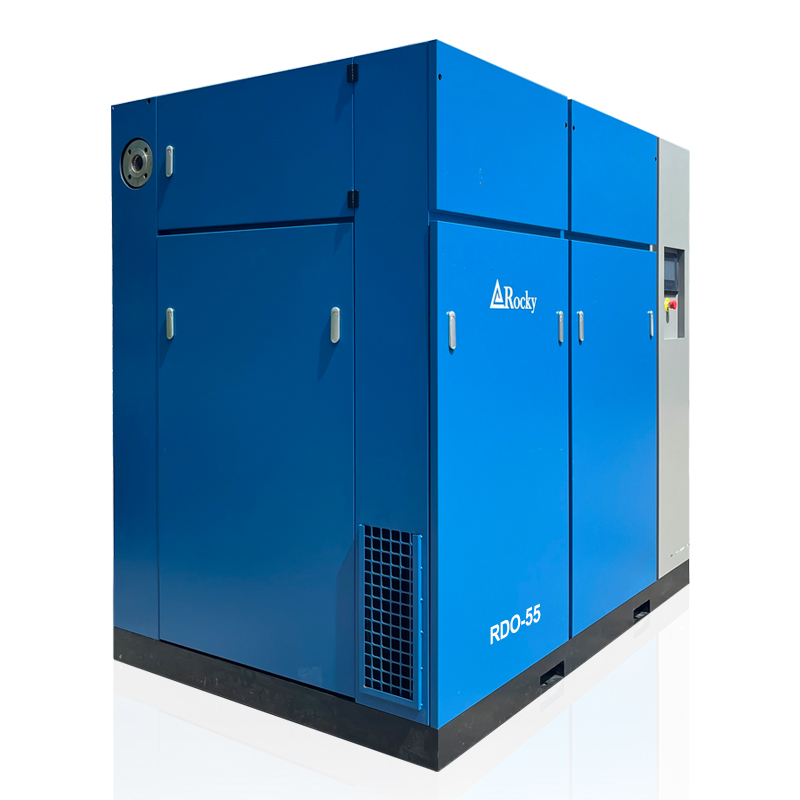
1. Discharge Pressure: The higher the discharge pressure of the compressor, the more energy it consumes. The sum of the operating pressure, pipeline resistance loss, and pressure drop of the supporting equipment should be used as the lower limit for selecting the rated discharge pressure of the screw air compressor. Generally, the diameter of the air supply pipeline should be larger to reduce resistance loss and achieve the goal of reducing energy consumption during long-term operation. The higher the discharge pressure of the compressor, the more energy it consumes. Therefore, do not choose a compressor with excessively high discharge pressure.
2. Air Flow Rate: Calculate the actual total air consumption × 1.1-1.2 coefficient as the basis for selecting the air flow rate model. If the selected flow rate is too low, it will not meet the requirements of the air-consuming equipment; if it is too high, it will result in high energy consumption during unloading and uneconomical operation. At the same time, purchasing a screw air compressor with a large air flow rate is more expensive.
3. Compressed Air Quality:
Based on the requirements of the air-consuming equipment in the industry, the screw air compressor and supporting equipment should be selected appropriately. The following points should be considered:
1) To reduce the oil content in the compressed gas, an oil removal purifier can be used. If high treatment standards are required, multi-stage treatment can be used.
2) To reduce the water content in the compressed gas, water removal equipment should be used. 1. When the compressor stops due to power failure, to prevent the compressor from starting under pressure, the pressure switch power-off handle should be moved to release the air in the pipeline before restarting the compressor.
2. Users must install a protective grounding wire for the compressor to ensure good contact between all metal casings of the compressor and the ground. The grounding resistance should meet national standards.
3. If the compressor experiences serious air leakage, abnormal noise, or unusual odor, it must be stopped immediately. It can only be restarted after the cause is identified, the fault is eliminated, and normal operation is restored.
4. The air compressor is an oil-free air compressor, and the friction parts are self-lubricating, so absolutely no lubricating oil should be added.
5. The air compressor must be fixed on a ventilated, stable, and sturdy work surface. To reduce noise and vibration, a vibration damping device must be installed. 6. The filter media (foam sponge or felt) in the filter should be cleaned every three months. Dust should be blown off the media, and if necessary, it should be washed with water and dried before reuse.
7. The compressor should be maintained at least quarterly. Maintenance includes thoroughly cleaning dust and dirt from the outside of the compressor, checking and tightening all connecting bolts, ensuring the grounding wire is intact, and checking for aging or damage to electrical wiring.