
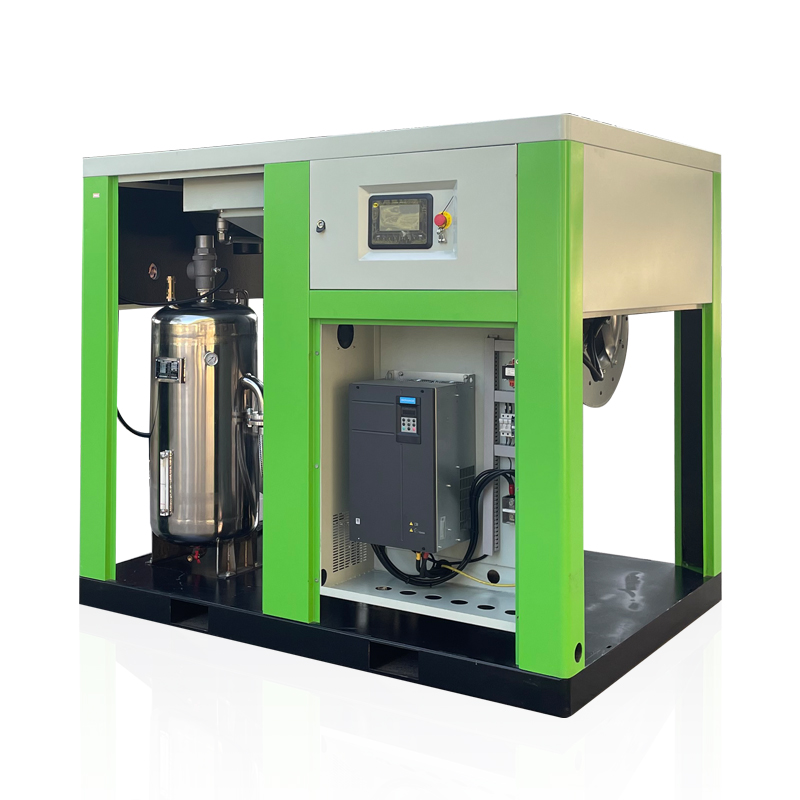
Air compressor safety valves belong to the category of automatic valves. Their working principle is that when the pressure of the medium in the air compressor or pipeline rises above a specified value, the internal medium is discharged to the outside of the system, preventing the internal pressure from exceeding the specified value. This plays a crucial role in protecting the operation of the air compressor and ensuring personal safety. Furthermore, according to the "Safety Valve Safety Technology Supervision Regulations," safety valves should be calibrated at least once a year.
Air Compressor Safety Valve Calibration Methods
1. Offline Calibration on a Test Bench: The safety valve is installed on a test bench, and a calibration medium is used to open the safety valve. The opening pressure is then observed and confirmed using a pressure gauge. However, this method cannot be used for back-pressure safety valves or safety valves for high or low-temperature media.
2. Online Instrument Calibration: The downward spring force acting on the safety valve is measured using external force, and the opening pressure of the safety valve is calculated. The advantage of this method is that it does not affect production or system pressure, and the detection speed is convenient and fast. The disadvantage is that it cannot detect the sealing performance of the safety valve.
3. Pressure-Increasing Jump Method Calibration: The safety valve is installed in the system, and the system pressure is artificially increased until the safety valve opens. The opening pressure of the safety valve is then observed. However, this calibration method can damage the sealing surface of the safety valve, and the operational risk is greater than other methods, so it is not recommended.