
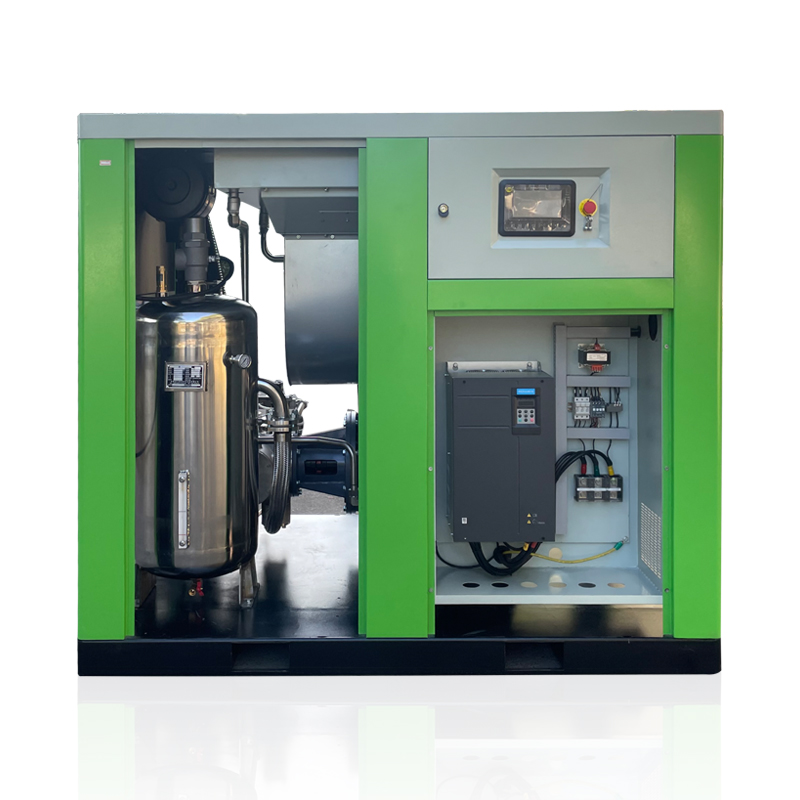
1. Poor environmental ventilation and heat dissipation. Reasons: First, the compressor is too close to walls or other obstacles; second, there are other heat sources near the air compressor; third, the front and side doors are open during operation, preventing the fan from generating a strong airflow.
2. Radiator blockage. Long-term operation of the air compressor can cause a layer of dust or oil sludge to accumulate on the surface of the radiator, and the internal copper pipes may also become blocked due to oil buildup, resulting in poor heat dissipation.
3. Dirty oil filter. When the oil filter is too dirty, the oil cannot enter the compressor at the normal flow rate, and the compressor will overheat due to insufficient cooling and lubrication. When the pressure difference between the inlet and outlet exceeds 0.18 MPa, the filter element needs to be replaced.
4. Low cooling oil level. When checking the cooler, if the oil level is below the lower end of the inspection tube, the oil level should be replenished immediately.
5. Poor oil quality. The manufacturer's special compressor oil should be used. When using other inferior oils, the viscosity and specific heat do not meet the standards, resulting in excessive temperature.
6. Fan belt broken or loose. When the belt breaks, the air compressor will automatically shut down after about 5 minutes of operation due to excessive temperature. A loose belt will reduce the fan speed, affecting heat dissipation. In this case, the fan belt should be replaced or adjusted for tightness.
7. Oil shut-off valve failure. When the oil shut-off valve fails to open, the compressor's temperature rises rapidly after startup due to lack of oil lubrication and cooling, and it will automatically shut down after about 1 minute. Remove the temperature plug at the exhaust end of the compressor main unit; you will find that the plug is dry and oil-free, and blue smoke is coming out of the hole. Open the inspection hole at the bottom of the air compressor, remove the oil shut-off valve, and gently move the valve stem with your finger to see if it can be pushed back and forth and if it can easily return to its original position. If movement or return is difficult, further disassembly of the oil shut-off valve is required. If there is oil sludge on the valve stem or valve hole, it needs to be polished with fine sandpaper until it slides easily; if the spring is broken or jammed by foreign objects, it will also affect the movement of the valve stem. In this case, the spring needs to be replaced or the spring and spring seat need to be cleaned.