
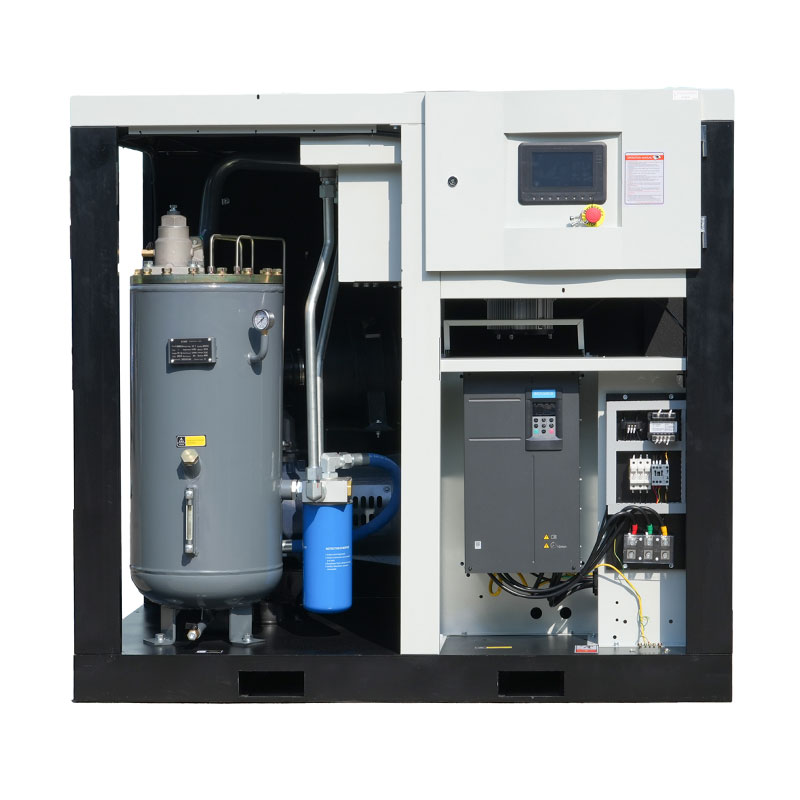
1. Because there is always moisture in the air, also known as humidity, it becomes supersaturated after compression, and the moisture in the air is analyzed into liquid. The moisture content in compressed air is related to the humidity of the air. If the machine room environment is too humid, the moisture content in the air will exceed the usage standard.
2. The air compressor's automatic drain valve or the air storage tank's automatic drain valve is blocked.
3. The corresponding dryer is not installed or does not work properly after installation (the drying equipment malfunctions and is not detected and handled in time), resulting in the compressed gas from the air compressor not being processed in time, causing a large amount of moisture to remain. This fails to meet normal usage requirements.
4. Insufficient measures after installation. In production processes with strict requirements for compressed air quality, facilities such as precision filters are generally used to purify the gas a second time until it meets production requirements.
To ensure that the gas quality meets the production process requirements, when your air compressor has water, you can check the reasons according to the above situations, find the fault, and take remedial measures.
Air Compressor Not Draining
A customer asked: "My air compressor hasn't been drained for two months, what will be the impact?"
If the water is not drained, the water content in the compressed air will increase, affecting the quality of the compressed air and the downstream equipment; the oil-gas separation effect will worsen, the pressure difference of the oil-gas separator will increase, and it will also cause corrosion of parts.
How is the water produced?
When the air compressor is working, the temperature inside the compressor head is very high. The moisture in the natural air inhaled during the operation of the air compressor will form water vapor. The air storage tank not only provides a buffer and storage space for compressed air but also reduces pressure and temperature. When the compressed air passes through the air storage tank, the high-speed airflow collides with the tank wall, causing convergence, and the temperature inside the air storage tank drops rapidly, causing a large amount of water vapor to liquefy and form condensed water. If you encounter humid weather or winter, more condensed water will be formed.
When should you usually drain the water?
Adjust according to the specific usage environment and working conditions, and regularly drain the condensed water or install an automatic drainage device. It mainly depends on the humidity of the inhaled air and the outlet temperature of the air compressor. An automatic drainer can also be added for processing.