
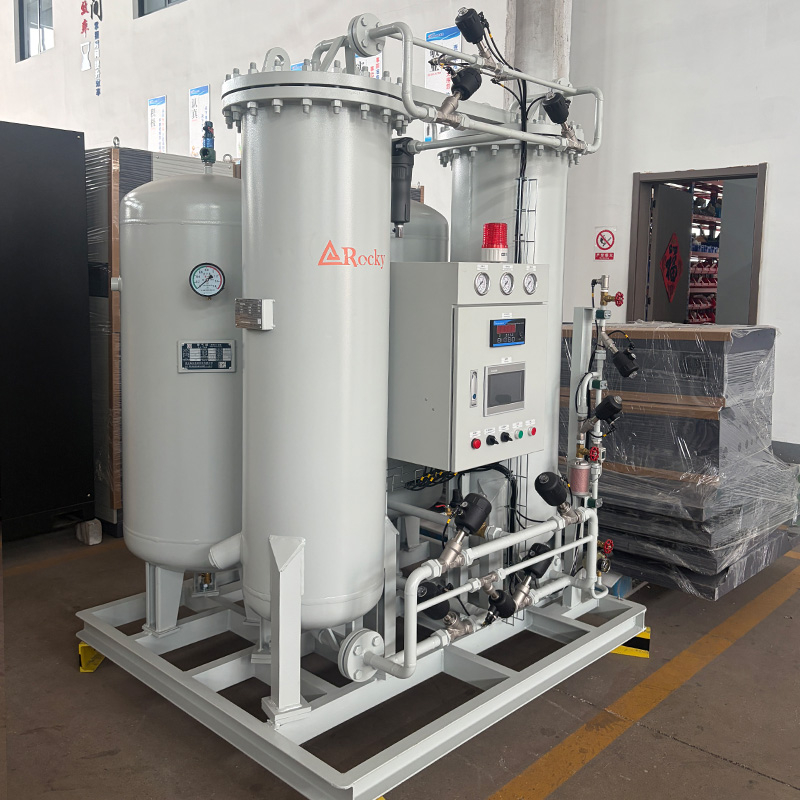
Nitrogen compressors (often referred to as nitrogen air compressors or simply nitrogen compressors) are primarily classified based on their working principle, discharge capacity (flow rate), and lubrication method. Common types include reciprocating piston, centrifugal, and screw compressors.
1. Classification by working principle: Reciprocating piston nitrogen compressors: Compress nitrogen via the reciprocating motion of a piston within a cylinder; suitable for high-pressure, low-flow applications. Centrifugal nitrogen compressors: Utilize a high-speed rotating impeller to impart centrifugal force and kinetic energy to the nitrogen, which is then converted into pressure energy; suitable for industrial scenarios requiring high flow rates and continuous operation. Screw nitrogen compressors: Compress nitrogen by changing the volume through the meshing of male and female screws; suitable for applications requiring moderate flow rates and low-to-medium pressures.
2. Classification by discharge capacity (flow rate): Micro and small nitrogen compressors: Flow rate typically below 60 m³/h. Medium-sized nitrogen compressors: Flow rate between 60 and 1,200 m³/h. Large nitrogen compressors: Flow rate equal to or greater than 1,200 m³/h.
3. Classification by lubrication method: Oil-free nitrogen compressors: Do not require lubricating oil inside the cylinder, ensuring high nitrogen purity; commonly used in the electronics, food, and pharmaceutical industries. Oil-lubricated nitrogen compressors: Use lubricating oil to lubricate and seal moving parts; widely used in industrial chemical applications and other scenarios where strict oil-free requirements do not apply.