
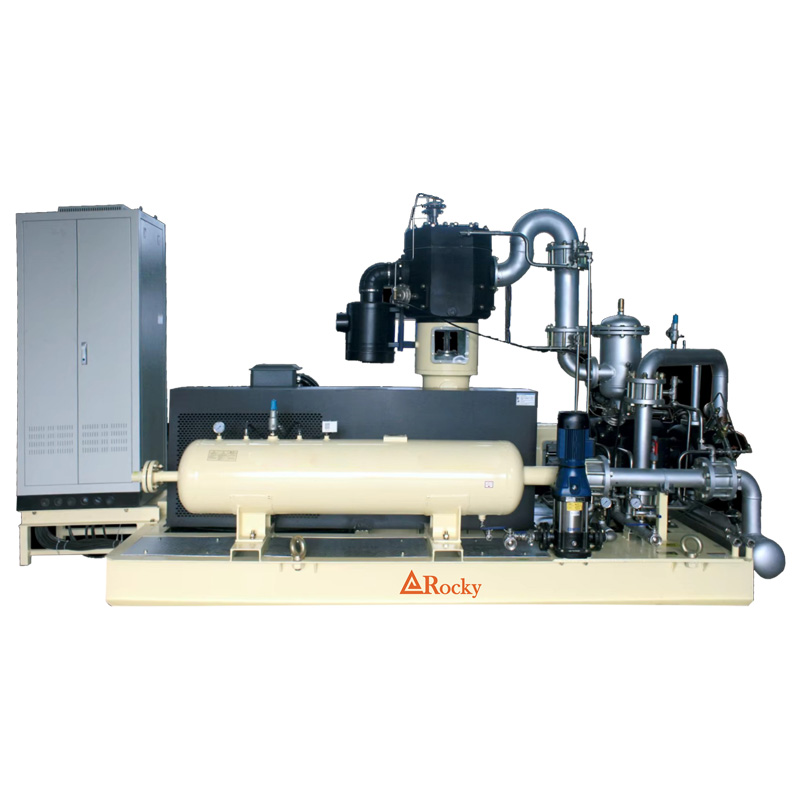
Oil-free air compressors generate a lot of high temperatures during operation. However, due to their self-protection mechanism, they may trip – this means the compressor is overloaded, the protector trips, and the compressor stops working. Below, we'll briefly discuss some reasons for oil-free air compressor tripping.
The reasons for an oil-free air compressor tripping are as follows:
1. Check the pressure gauge on the oil-gas separator. If pressure is displayed, it initially indicates that there is pressure in the compressor system, causing the compressor to start under pressure, resulting in excessive starting current. The circuit breaker trips to protect the unit. This situation is usually caused by a faulty small pressure valve or a blockage in the pressure relief system.
2. Premature opening of the unloading valve. Before starting the oil-free air compressor, the unloading valve is closed. When the compressor starts, the unloading valve gradually opens. However, if the opening time is a few seconds earlier than the preset time, it will cause the starting current of the compressor to increase, leading to a trip. 3. A faulty changeover switch causes the oil-free air compressor to trip immediately after starting. During operation, the air switch can be affected by vibrations from the oil-free air compressor, causing the set start-up time to shorten, or even tripping instantaneously upon starting. This falls under the category of electrical faults, which are complex to diagnose and carry a certain degree of danger.
Oil-free air compressor tripping is more common in summer. Maintaining a dry and well-ventilated working environment, just like a good working environment for people, can significantly improve machine efficiency.