
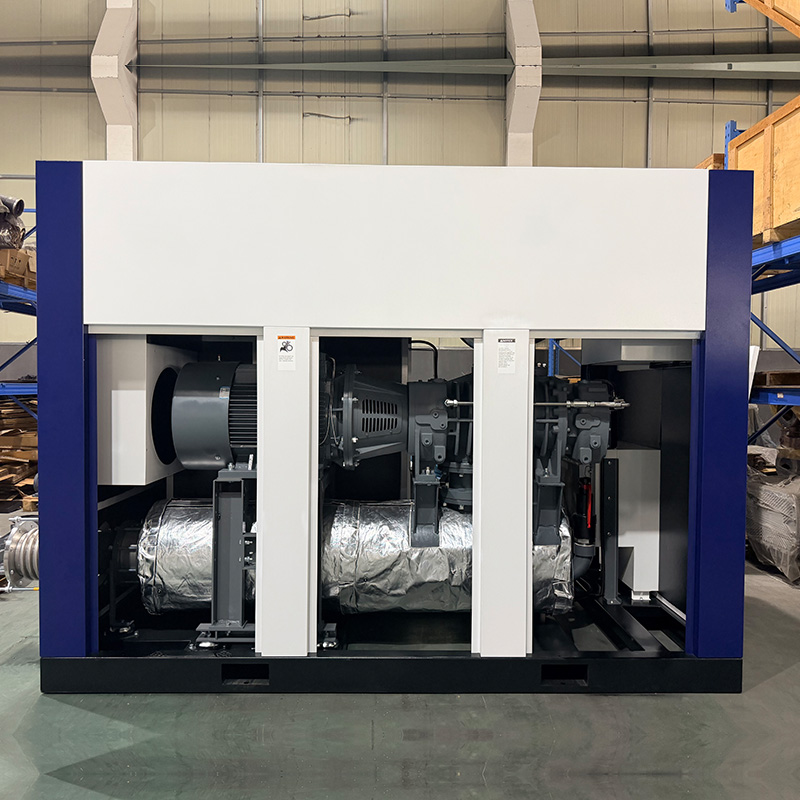
Screw blowers (also known as screw fans) utilize an internal thermodynamic compression process, resulting in superior energy efficiency and significantly higher performance. They employ a dry, oil-free screw air end, ensuring the compressed air is free of oil contamination—thereby eliminating issues such as solenoid valves becoming clogged by oil residue. The use of a screw air end enhances overall efficiency. These blowers are primarily used in industries such as wastewater treatment, electronics, papermaking, metallurgy, and textiles/chemical fibers.
Operating Principles: In the wastewater treatment industry, they are mainly used for aeration processes to ensure thorough mixing of water and reactants. Additionally, the airflow generated by the blower can cool object surfaces or remove moisture to dry products, giving rise to two other functions: blast cooling and blast drying. The airflow also facilitates complete combustion, making the blowers suitable for processes such as combustion and oxidative desulfurization.
Equipment Features:
1. Automatic data recording and easy monitoring: The equipment is equipped with a remote IoT system that automatically records and saves data. Users can monitor the blower's operating status anytime, anywhere via mobile devices or computers, and stored data can be printed out.
2. Specialized design for reduced noise pollution: The unit features a fully enclosed sound-insulating canopy for superior noise suppression. An exhaust silencer is fitted to the outlet to further minimize noise impact. Additionally, the air filtration system is designed to be dust-proof and noise-reducing, effectively lowering noise levels while purifying the intake air.
3. Simple operation and easy installation: Operators can quickly master the equipment through training. The installation process is straightforward, requiring no complex procedures, which facilitates easy on-site setup.