
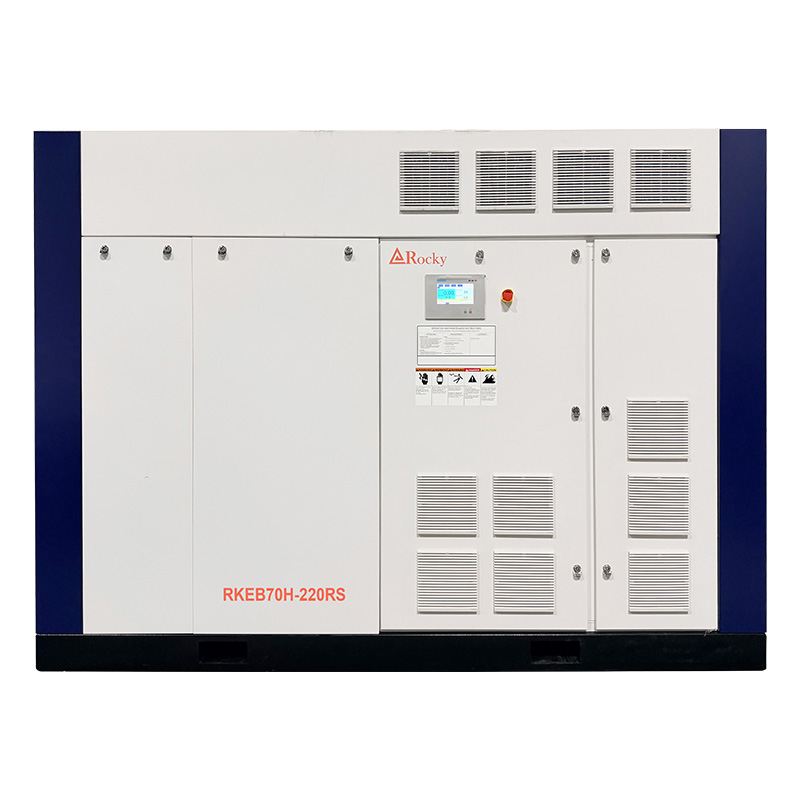
Calcium carbonate is an inorganic chemical product widely used as a filler in industries such as rubber, plastics, papermaking, coatings, inks, and pharmaceuticals. Nano-calcium carbonate can be produced via both chemical and physical methods. Chemical methods include carbonation, emulsion synthesis, metathesis, and jacketed reactor processes, with carbonation being the primary method for producing nano-calcium carbonate. In the carbonation process, screw blowers are used to feed a mixture of air and carbon dioxide into the bottom of the tower to facilitate the carbonation reaction.
The process begins with the calcination of limestone to produce calcium oxide and kiln gas. Next, the calcium oxide is slaked, and the resulting calcium hydroxide suspension undergoes high-shear pulverization and multi-stage separation to remove coarse particles and impurities, yielding a refined calcium hydroxide suspension of a specific concentration. Subsequently, the carbon dioxide gas mixture is introduced into the carbonation tower along with crystal-habit modifiers and surfactants; the carbonation reaction proceeds to completion, resulting in a calcium carbonate slurry with the desired crystal form. Finally, the slurry undergoes dewatering, drying, and surface treatment to produce nano-calcium carbonate.
Carbonation is the core of the production process. Depending on how the carbon dioxide gas contacts the calcium hydroxide suspension, carbonation methods can be categorized into various types, such as batch bubbling, spray carbonation, stirred-tank carbonation, jet carbonation, and high-gravity carbonation. Despite the diversity of production methods, the fundamental principle remains the same: obtaining crystalline calcium carbonate through a gas-liquid-solid three-phase reaction.
Consequently, screw blowers play a vital role in calcium carbonate production, and oil-free screw blowers are now widely utilized in this field.